
Superwave
Designing an intelligent community platform
Context
Superwave is a new product by Hopin that makes it easy for community leaders to understand, engage and create more value for their community members.
Design methodology
Given the time constraints to launch a competitive product into the market, we had to work in a lean environment and I decided to adopt a few key methodologies to help us iterate quickly.
Ideation sessions with the team (1 x sprint) to tackle ongoing design/dev challenges.
Design office hours (1 x week) to share work in progress and align on key decisions.
User interviews (1-3 per week)
Design roadmap with key milestones and targets to hit
Co-creation and feedback sessions with selected users
Customer problems
After speaking with over 200+ community managers, we found that they all struggle with some similar problems:
Onboarding and activating new members
Re-engaging members and bringing them back to the platform
Creating value for members in terms of content and conversations.
Understanding what’s happening in their communities and how to take actions
The ‘community flywheel’
Most community platforms leave it up to you to create value for your members, to make sure they're engaged, and to turn that engagement into understanding. By acting as a partner to community managers, we wanted to productise each of these steps to better serve their needs.

Leaning into our customer personas, we landed on a few user stories for our MVP:
As a Community Manager, I need:
A platform that helps me spark discussions and share content with my members
My content to be discoverable and presented to the right members, at the right time
A clear and easy way to understand how my community is performing so I can have a clear picture of ROI.
An easy way to prompt members to return to my community
As an Community Member, I need:
An active community where I can find information that suits my needs and interests
A way to connect with other community members
Customer workshops

I led the team through an interactive ideation session where we used a lean UX canvas to help us align on the problem areas, business outcomes and possible solutions. We used this as a starting point for developing wireframes and user stories.

Wireframes & Information Architecture
When designing the initial wireframes I was informed by our research and competitive analysis and wanted to explore new ideas of how people could create and attend online events.


Exploring ways a creator could discover and activate Eventbrite Live in the core product
Remote ideation workshop
It was important for me to involve the engineers and other stakeholders in the design process so I facilitated a 2 hour ideation workshop where each person could brainstorm and share their ideas. Since all of our team members are remote, we used Whimsical to create basic wireframes which the team later voted on.

Designing the attendee event experience
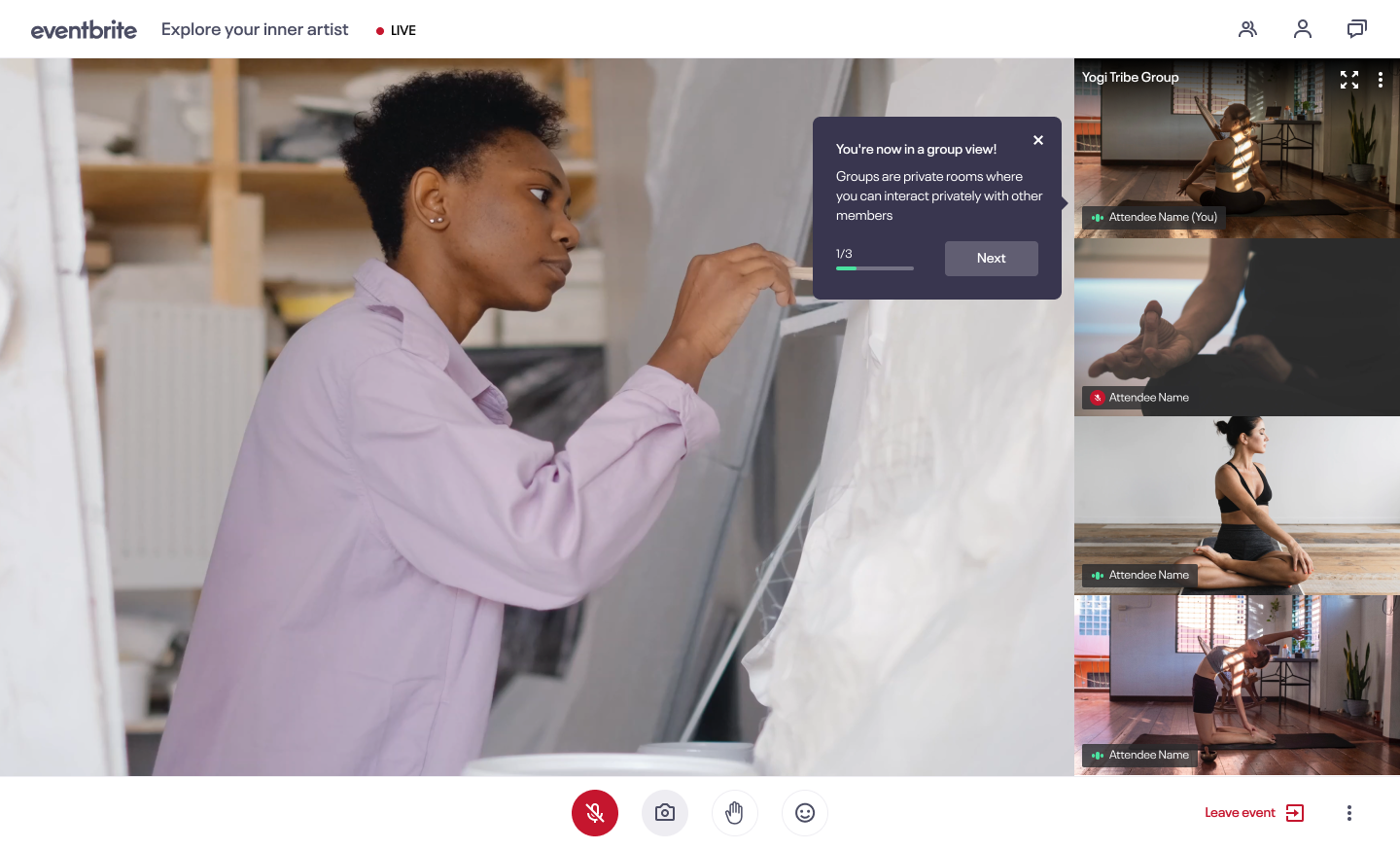
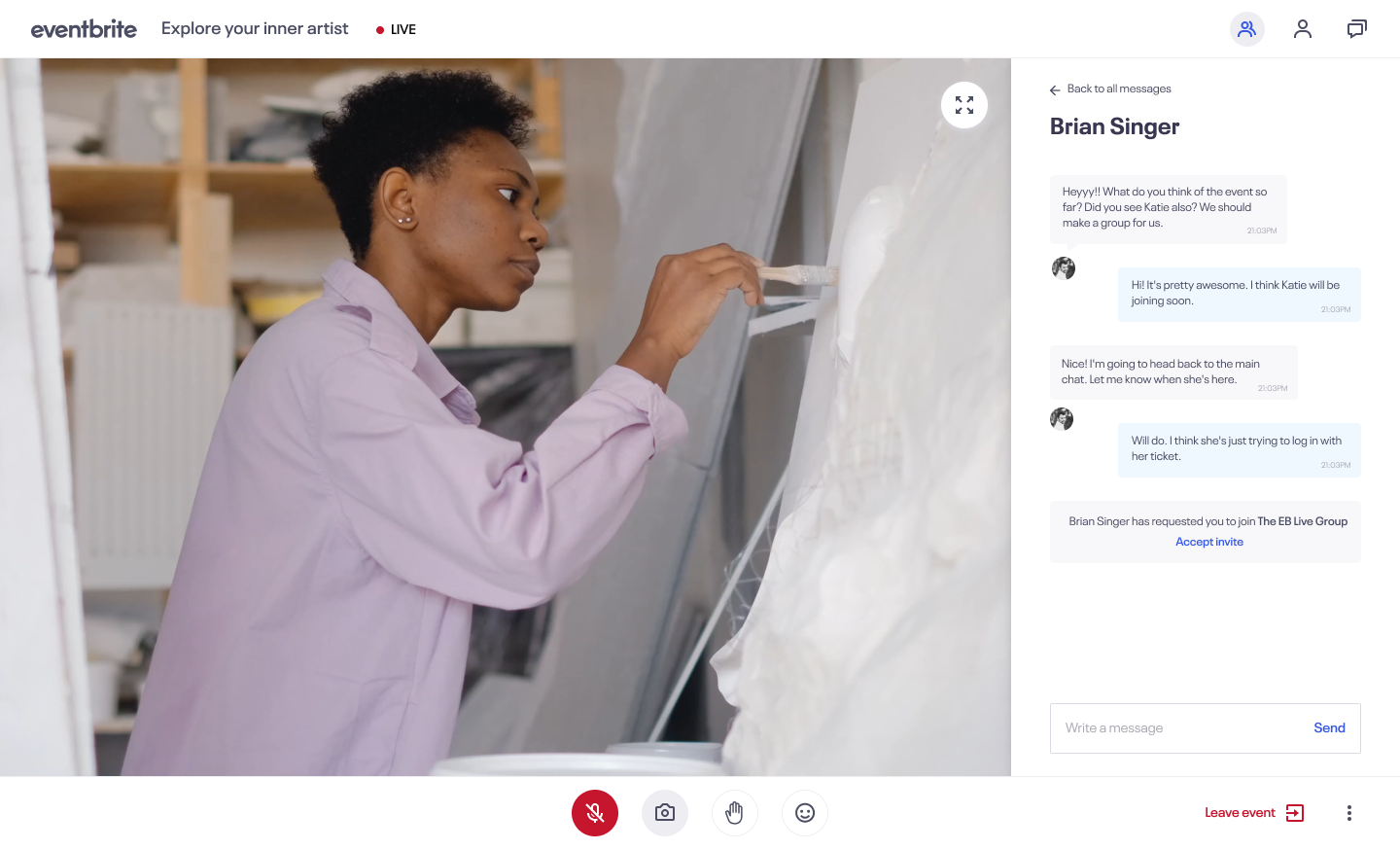
After numerous user interviews and competitive assessment I worked with the PM to identify the following core features for the initial MVP release:

User story mapping helped me map out different user stories into where they exist in the flow, the information architecture and also what stage they are planning to be released.
User flows and hi-fidelity screens
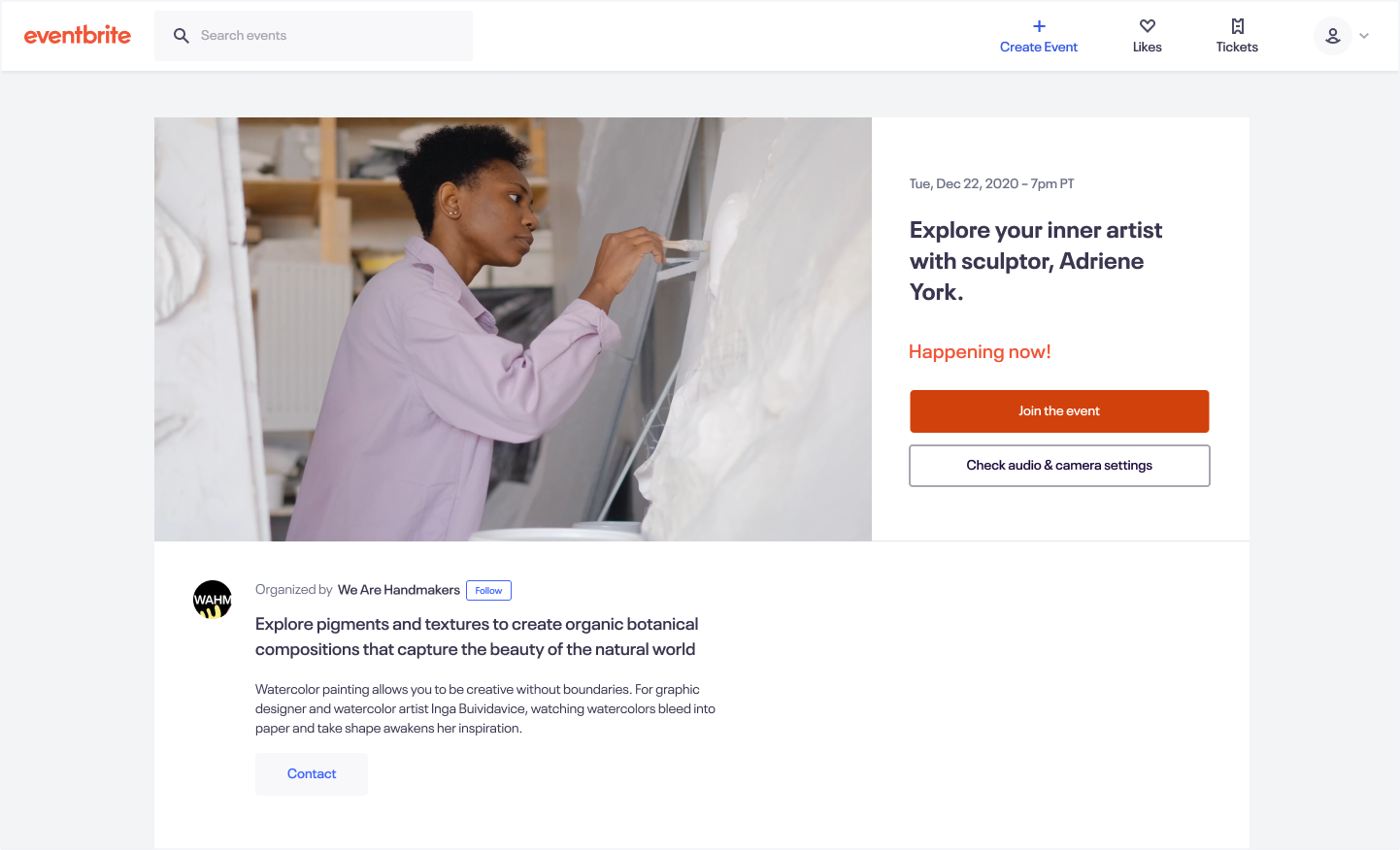

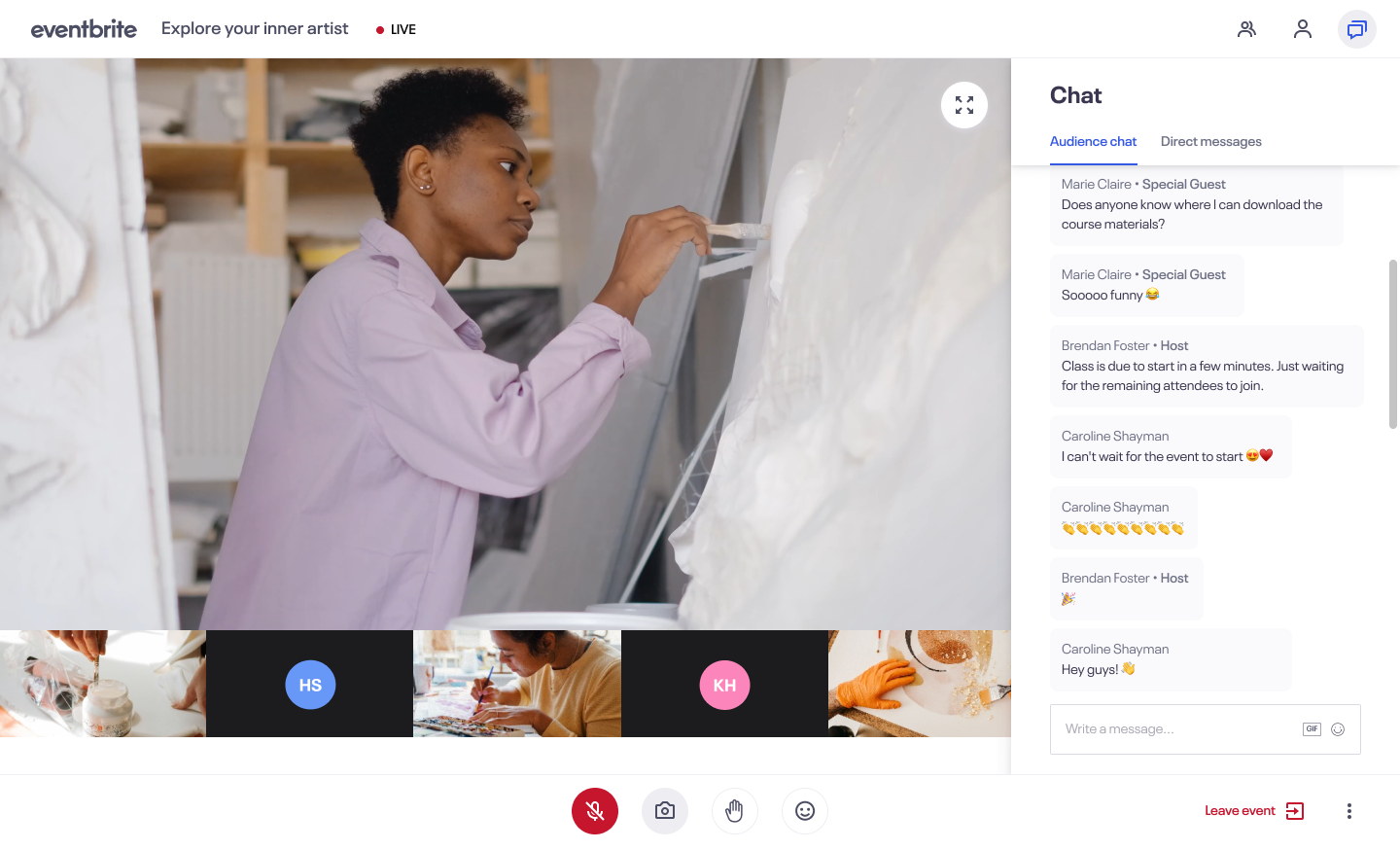
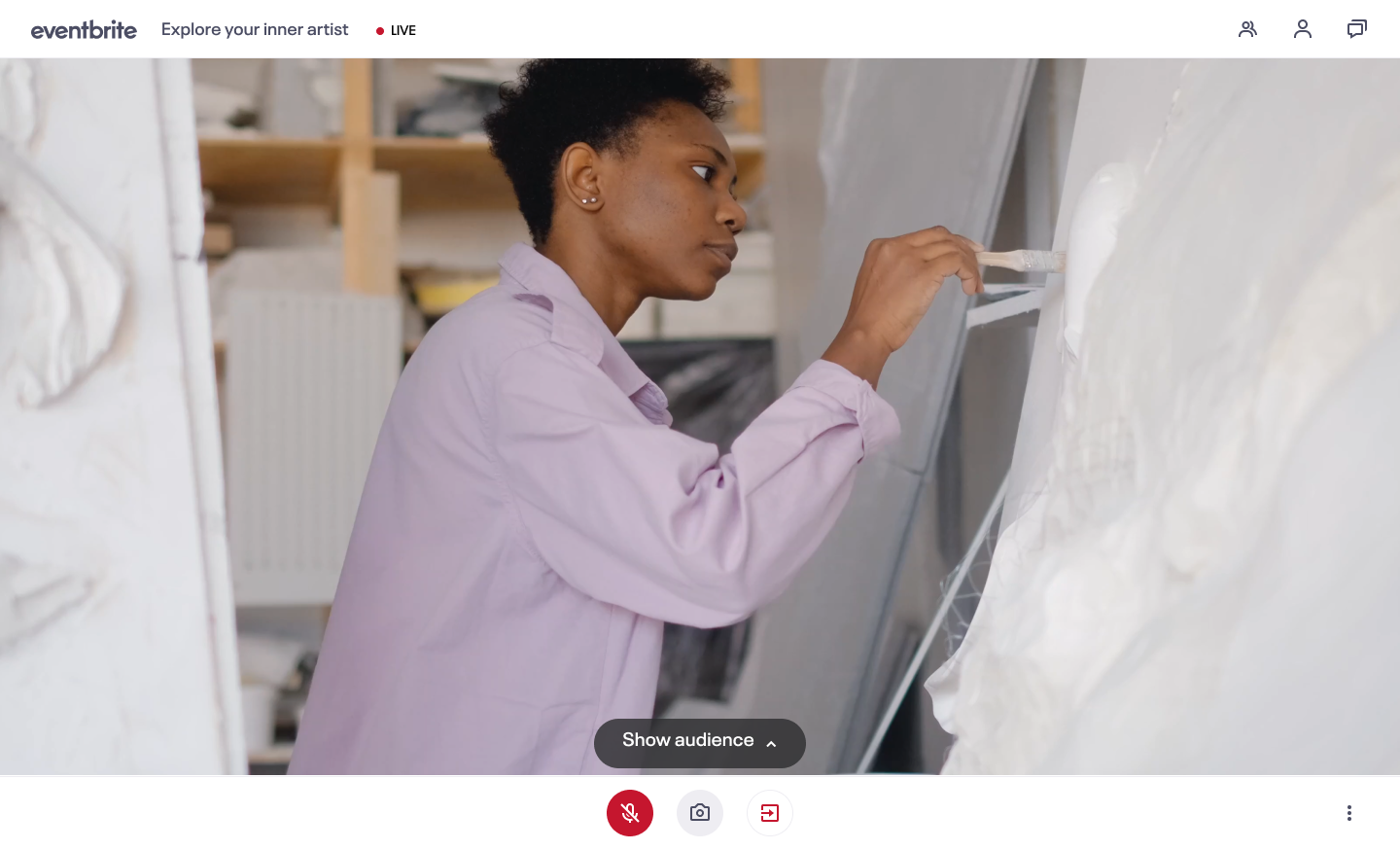
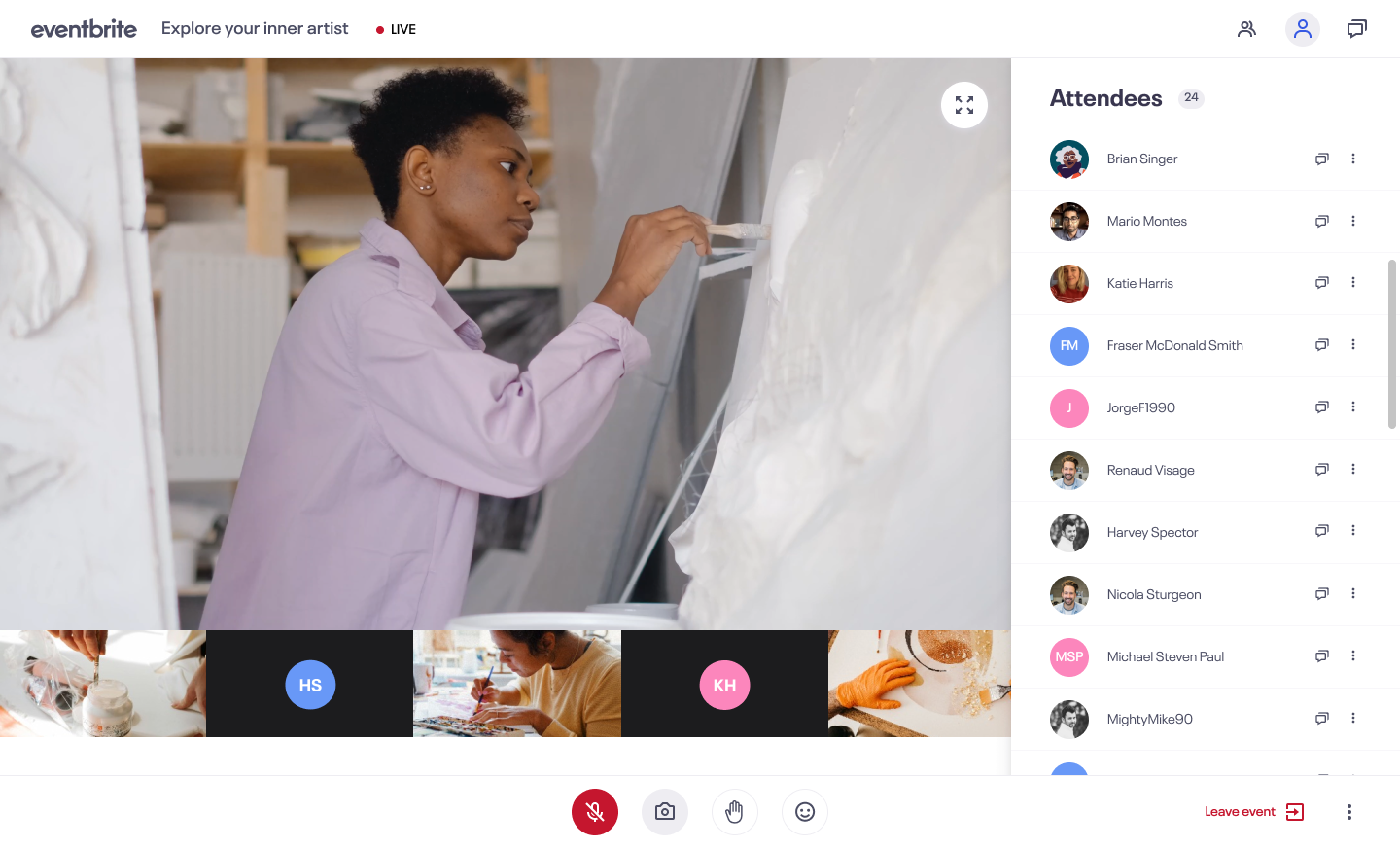

Designing the creator event experience
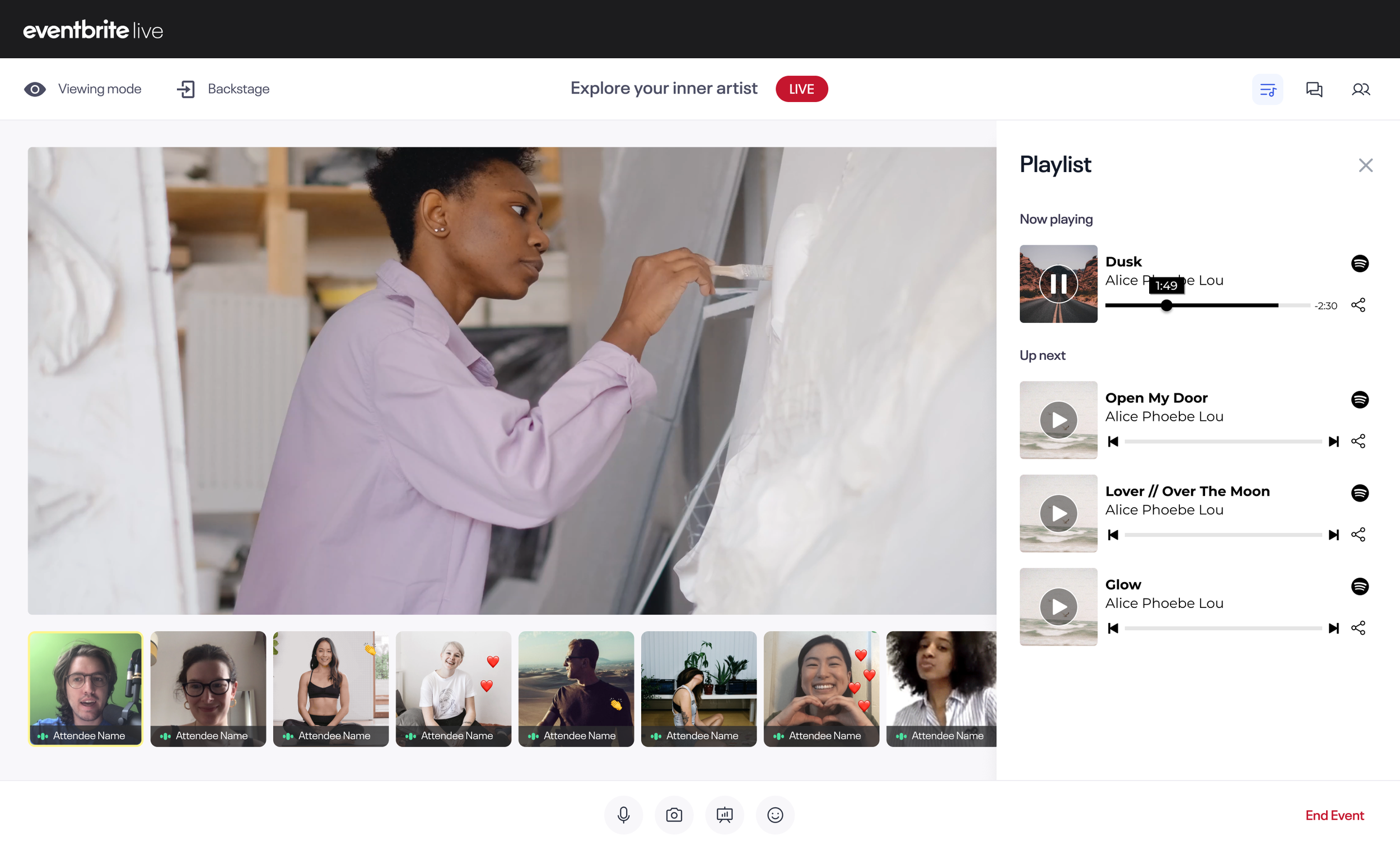
As a team, we decided to keep the creator experience fairly similar to the attendee UX to help reduce the implementation time. We would reuse existing components and only create new ones when it was a unique feature for the creator.


Design & Engineering Hack Day
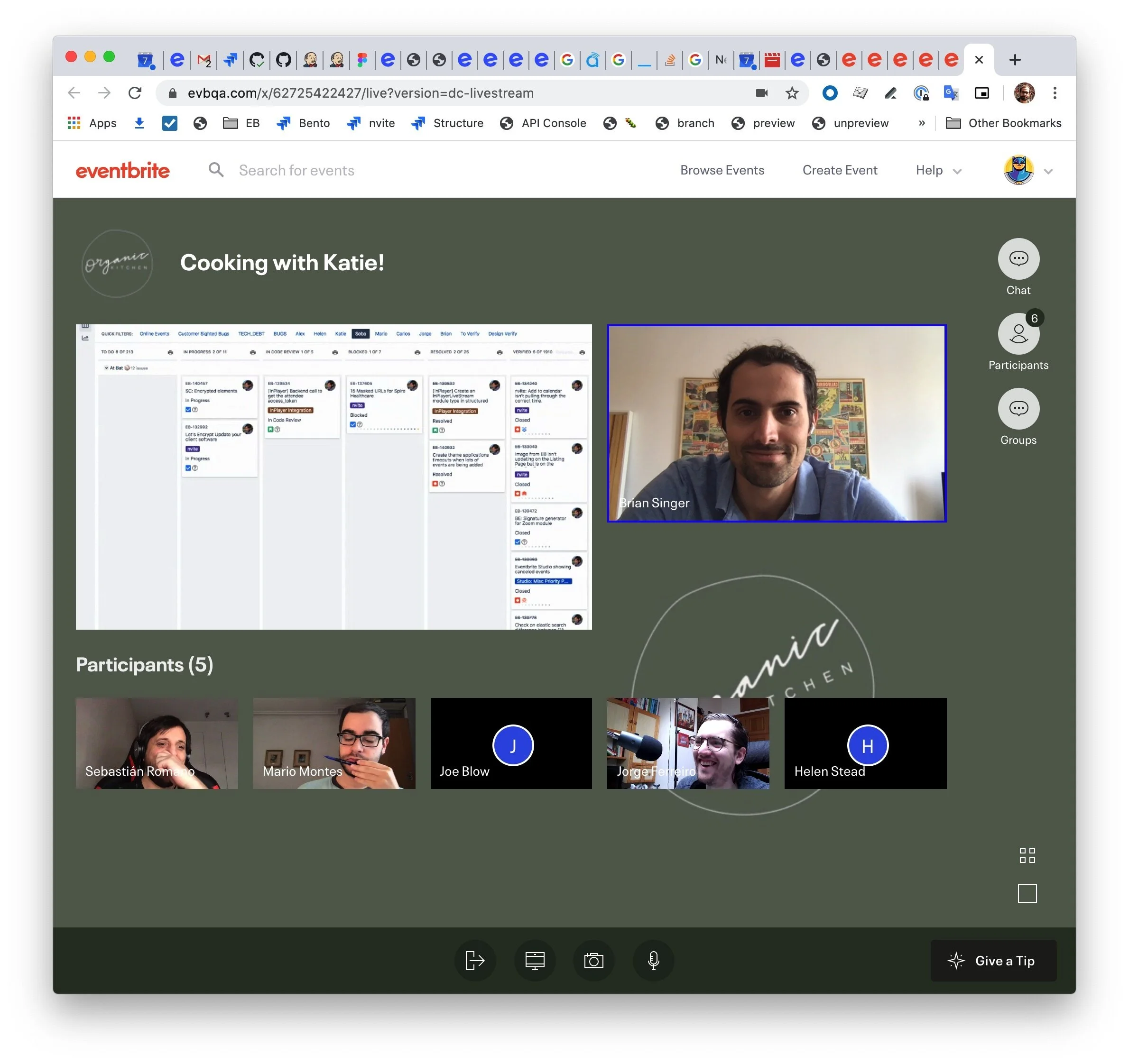
Due to an extremely limited timeframe, we spent 2 days doing a team wide 'hack day'.
As the product designer for the team, I spent the two days quickly putting together hi-fidelity screens while the engineers worked on implementing it with a third-party tool.
Remote usability testing
To help validate some of our ideas, we blended moderated user interviews with event creators, and unmoderated testing on usertesting.com. This helped inform the design strategy and plan for future iterations. To do this, I created a test plan and built an end to end prototype of the attendee experience using task based analysis to see how intuitive the experience was.
Conclusion
This has been an interesting project for me to work on because I was able to be involved in the product strategy and design a brand new experience for Eventbrite in a new market. There is still a lot of work to do to bring it to market and the next steps will be to test it with a small sample of beta users and design the next iteration cycles.
